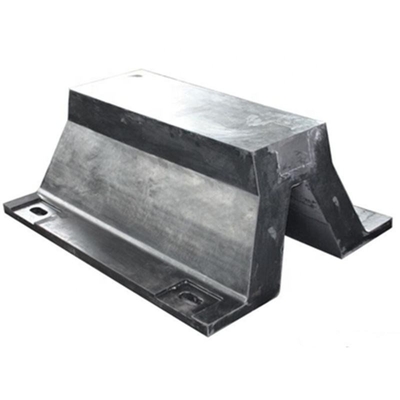
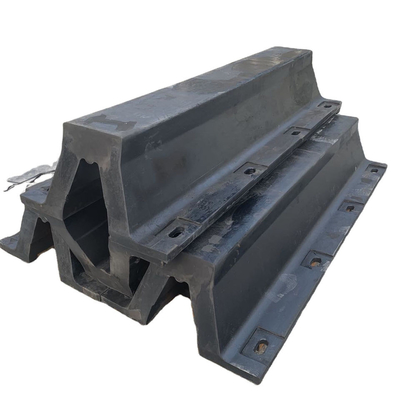
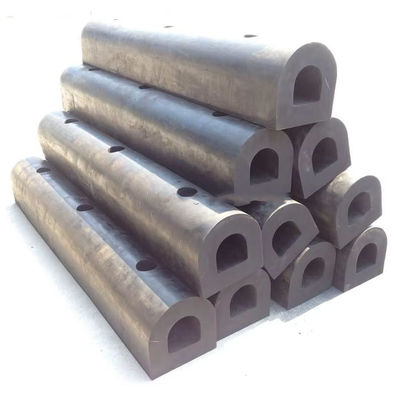
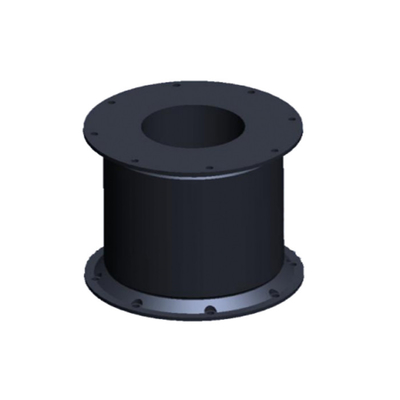
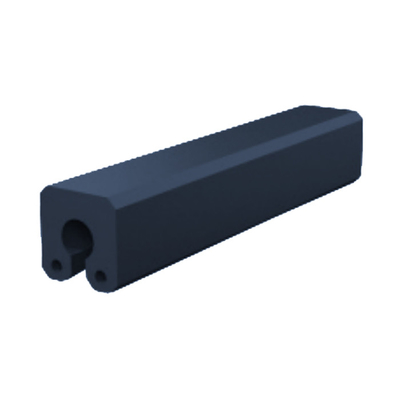
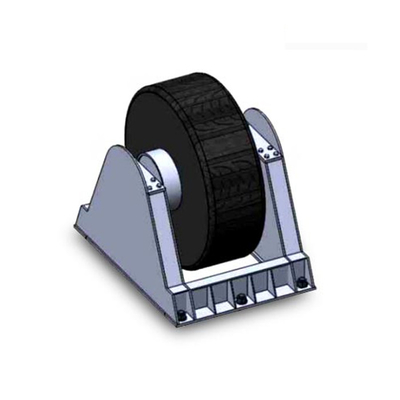
Arch Rubber Fender is a marine impact protection system engineered for long service life under demanding berthing conditions where repeated compression, environmental exposure, and structural stability are critical design considerations.
Manufactured from high-performance marine elastomer compounds using controlled mixing, precision molding, and optimized vulcanization processes, this fender achieves consistent material properties throughout the entire rubber body. The manufacturing process ensures uniform density distribution, stable hardness, and reliable mechanical performance during long-term operation.
A multi-purpose commercial port in Hamburg, Germany initiated an infrastructure renewal project to improve the durability of its berthing protection systems serving cargo vessels, Ro-Ro ships, and coastal service vessels.
The original fender system had been in operation for more than a decade and exhibited progressive material aging, reduced elastic recovery, and surface cracking caused by long-term ultraviolet exposure and repeated compression cycles.
After installing Arch Rubber Fender systems manufactured with high-performance marine elastomer compounds, routine inspections indicated that the fenders maintained stable geometry, consistent elasticity, and reliable energy absorption characteristics with only minor surface wear. Port maintenance personnel reported a significant reduction in replacement frequency and inspection workload.
| Parameter | Specification |
|---|---|
| Product Name | Arch Rubber Fender |
| Material | Natural Rubber, Silicone Rubber |
| Colour | Black, or Customized |
| Surface | Smooth |
| Size | Height: 200-1000mm Length: 1000-3500mm All Sizes Can Be Customized |
| Physical Properties | Polymer Content: 100% Virgin Working Temperature: -50℃~240℃ Tensile Strength: ≥16 Mpa Density: 90+/-5 Per 100mm in Hardness: 50-70 (shore A) Elongation: ≥400% |
| Features |
|
| Application | Multi-Purpose-Terminals, RoRo Ramps, Passenger Vessel Terminals, Barge |
| Model | W [mm] | B [mm] | F [mm] | C [mm] | H [mm] |
|---|---|---|---|---|---|
| HM-ARF200H | 400 | 320 | 145 | 128 | 200 |
| HM-ARF250H | 500 | 410 | 175 | 160 | 250 |
| HM-ARF300H | 600 | 490 | 225 | 196 | 300 |
| HM-ARF400H | 800 | 670 | 300 | 260 | 400 |
| HM-ARF500H | 1000 | 840 | 375 | 325 | 500 |
| HM-ARF600H | 1200 | 1010 | 450 | 390 | 600 |
| HM-ARF800H | 1600 | 1340 | 600 | 520 | 800 |
| HM-ARF1000H | 2000 | 1680 | 750 | 650 | 1000 |
Specially formulated marine-grade elastomer compounds provide balanced mechanical properties including tensile strength, elongation, compression recovery, and abrasion resistance. Optimized material composition maintains stable elasticity throughout prolonged exposure to seawater, oxygen, ozone, and ultraviolet radiation.
Engineered to maintain structural integrity under long-term cyclic loading by controlling internal stress distribution throughout the rubber body. Optimized arch geometry reduces localized deformation and limits stress concentration, allowing efficient recovery after repeated vessel impacts.
Designed to retain original geometry after repeated deformation through controlled molecular crosslinking achieved during vulcanization. Stable recovery characteristics help maintain consistent energy absorption capacity over thousands of berthing cycles.
Material system is engineered to resist environmental degradation through improved resistance to oxidation, weathering, and chemical attack. This enhances dimensional stability and supports reliable mechanical performance throughout long-term outdoor operation.
Significant emphasis on material science throughout product development and manufacturing. Rubber compound formulation, raw material selection, mixing control, and vulcanization parameters are managed through standardized production procedures to ensure consistent mechanical performance.
Production using controlled molding equipment and standardized manufacturing processes achieves uniform dimensional accuracy and stable physical properties. Multiple inspection procedures ensure each finished product satisfies engineering specifications.
Customized engineering support by adjusting product dimensions, rubber hardness, mounting arrangements, and structural specifications to achieve compatibility with project-specific performance requirements.
Engineering support extends beyond product manufacturing to include technical consultation during project planning, product selection, installation guidance, and operational maintenance recommendations.