Thuis/Gevallen/On-site Performance of Upgraded Roller Fenders for High-frequency Berthing Operations
On-site Performance of Upgraded Roller Fenders for High-frequency Berthing Operations
May 26, 2026
We take a large-scale comprehensive port terminal as the practical application case to demonstrate the actual performance and advantages of our enhanced roller fender system in high-frequency docking scenarios.
This port terminal is located in a busy coastal shipping hub, mainly undertaking the berthing, loading and unloading services of cargo ships, container vessels and passenger ferries. The berth area features dense vessel flow, with an average of over 100 vessel docking and departure operations every day. Vessels of different tonnages come and go around the clock, resulting in extremely frequent contact between hulls and quay protection facilities. Before adopting our products, the terminal was equipped with traditional fixed rubber fenders. Due to the sliding friction generated during repeated docking, the hull paint and anti-corrosion coatings were prone to serious abrasion, scratches and peeling. Meanwhile, rigid impact would also cause minor dents on the hull surface. The port had to arrange regular hull maintenance and paint repair for calling vessels, and the quay wall also suffered continuous impact damage. High daily maintenance costs, prolonged vessel waiting time and potential navigation safety risks became major troubles restricting the terminal’s daily operation.
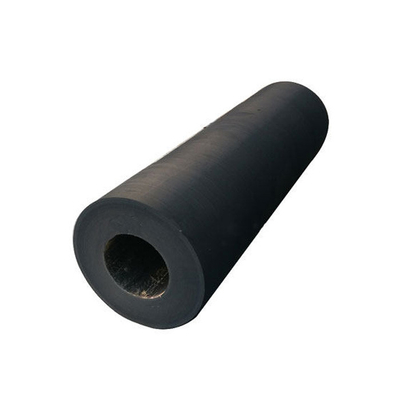
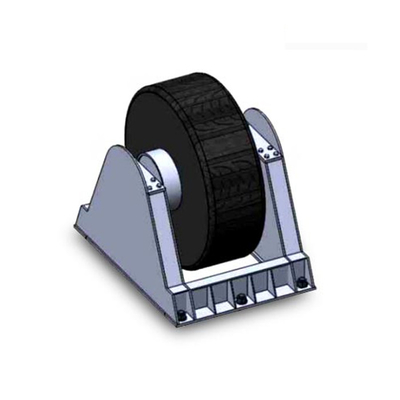
To solve the above problems thoroughly, the port officially selected our enhanced roller fender system for full renovation and upgrading of key berths and channel sides. According to the actual berth length, water depth, tidal range and the tonnage range of passing vessels, our technical team formulated a targeted installation scheme. We adopted a combined layout of single-row and double-row roller fenders, and adjusted the installation height and spacing reasonably to ensure the rollers can make full contact with the hulls of various vessels under different water level conditions. All supporting frames were made of thickened hot-dip galvanized steel with high structural strength and strong bearing capacity. The internal rotating parts adopted high-precision corrosion-resistant bearings and integrated solid shafts, which could keep rotating flexibly under heavy load. The rubber rollers were produced with upgraded high-abrasion rubber formula, featuring excellent elasticity, compression recovery, seawater corrosion resistance and anti-aging performance.
After the installation and commissioning were completed, the enhanced roller fender system was put into formal operation. Relying on its unique rotating structure, the system successfully converted the original sliding friction between hull and fender into rolling friction. When vessels approach, berth or move along the quay wall, the rubber rollers rotate synchronously with the hull movement, which greatly weakens friction force and buffer impact energy. After long-term continuous operation and on-site tracking inspection, obvious improvements have been achieved. The abrasion, scratches and coating peeling of vessel hulls have been greatly reduced, and the frequency of hull maintenance and paint repair has decreased significantly. The daily maintenance cost of vessels and terminal facilities has been effectively cut down.
In addition, the flexible rotating guidance function optimizes the vessel maneuvering experience. Ship pilots can complete docking and departure operations more smoothly, the overall berthing efficiency of the terminal is improved, and the probability of accidental collision between vessels and quay walls is also minimized. Even in bad weather such as strong winds and waves, the roller fender system still maintains stable working performance, without roller jamming, frame deformation or rubber cracking.
Up to now, the system has been running stably on site for more than two years. All components are in good condition, and only simple routine inspection is required in daily management, with almost no replacement of spare parts. The port operator spoke highly of this product. They pointed out that the enhanced roller fender system perfectly adapts to the working characteristics of high-frequency docking, effectively solves the long-standing problem of hull wear, creates a safer and more efficient operating environment for the terminal, and brings considerable economic benefits.
This practical case fully verifies the superior performance and reliable quality of our enhanced roller fender system. It is not only suitable for large commercial ports, but also widely applicable to shipyards, dry docks, ferry terminals, narrow waterways and ship locks with frequent vessel activities. We will continue to optimize product technology and provide more professional, durable and cost-effective marine protection solutions for global port and maritime industries.